Sunday, April 28, 2019

Medicine + Technology + Art Blog Week 4

The traveling exhibit of body world brings attention to all the natural beauty present in our human bodies. It uses preserved human bodies and a technique called plastination to show what is present underneath our skin. The Hippocratic oath demonstrates this relationship between these three things. Its main principles are to, "treat the sick to the best of one's ability, preserve patient privacy, teach the secrets of medicine to the next generation, and so on"(Rubens).
 I had my own experience with this relationship as I had to receive an MRI to examine if this lump in my neck was a tumor or extra skin. After sitting in a tube feeling like I was in space, the doctors brought up a picture that was of my neck and the regions around it. The picture that appeared before me looked like it could've been some sort of art form if I did not know it was an MRI of my neck. 

These diagrams help educate students, as well as, lead to developments in the study of what they represent. Imaging is huge in all parts of life and is used by artists, technicians, doctors, surgeons, teachers and more. Sylvia Casini's article on MRI's shows this. Use of these images allows for the development and change that we need as the human race grows. 


Works Cited: 


Gannon, Erin. “'Body Worlds' Opens a Window on 'Inner Space'.” OnMilwaukee.com, 18 Jan. 2008, onmilwaukee.com/visitors/articles/bodyworlds.html.

“HOME.” Christophe Luxereau Website : Home, www.luxereau.com/.

“KAC.” KAC, www.ekac.org/.

MRI Knee, www.cedars-sinai.edu/Patients/Programs-and-Services/Imaging-Center/For-Patients/Exams-by-Procedure/MRI/MRI-Knee.aspx.

“The Visible Human Project - Color Cryosections.” U.S. National Library of Medicine, National Institutes of Health, www.nlm.nih.gov/research/visible/photos.html.


Wednesday, April 24, 2019

Event #1 Blog

This experience at the UCLA's Meteorite Gallery helped me understand how science and art can work hand in hand. The two cultures are closely related if you look out for the relationship between the two. When looking at these meteorites and zoomed in photographs of them I can clearly note the objects figures being used in art pieces by many renowned artists.
 
I took a picture with the worker as shown above. He asked me what class this is for and I told him Desma 9. He was aware that this was an art class and he asked why I'm at a meteorite gallery if I'm taking a picture for an art class. I explained to him the relationship between art and science and told him that these two concepts work hand in hand. I explained how artists are influenced by scientific findings. 
I pointed to the different class of chondrites photo of a zoomed in, black photograph. This piece can influence in artist while looking at its composition and use of pattern. The black, white, and gray colors provide tone to the photograph and it honestly can be mistaken as a famous piece of abstract art. It has nearly every quality of a great painting but it is merely a zoomed in photograph of a chondrite. 

I would reccomneed this gallery to all students enrolled in Desma 9. I find it very intriguing comparing forms of science and art and seeing how each contributes to the other. This gallery shows how scientific findings can influence future art pieces and artists. The more scientists encounter new information, the more artists will be influenced by these findings. 

Sunday, April 21, 2019

Week 3 Robotics + Art

I constantly seemed to believe that the advancement of technology in the world directly correlates with the advancement in production. As time passes, new technology is being created helping people with several tasks. The latest advancement in robots however frightens human kind because we believe that the robots will eventually take over. Humans have this idea because of movies like RoboCop or other forms of entertainment that makes society sacred of technological advancements. 

Walter Benjamin wrote about how technology changes the way that humans view the world and how we interact with our environment. His piece “The Work of Art in the Age of Mechanical Reproduction” written in 1936 explain the relationship between technology and displays of human art. Benjamin compared a magician and surgeon to a painter and cameraman to explain the relationship in a comparable fashion. 

Today's society has advanced Benjamins initial claims even further as magicians that were then known as surgeons can now be linked to machines that perform surgery and exercise this magic with just technology without much human effort. The painter and cameraman example also has evolved as painters which evolved to cameramen has been linked to computers that can create a form of digital art through the advancement of technology. These advancements over time display a new way of expression that steer away from using too much human effort and instead are constructed through technology that makes expression easier. 


An example of these technological advancements is the transformation from the movie "Its a Wonderful Life" to the movie "Up". The advancement in displaying the plot of a movie went from a black and white low quality movie, to a fully animated cartoon movie with color and fluid movement in the screening. These expressions of art have drastically improved because of the advancement in technology  As time goes by humans will create newer and better ways to express themselves.  


Benjamin, Walter. The Work of Art in the Age of Mechanical Reproduction. London: Penguin, 2008. Print. 

Kristie.Mass-produced Art at Ikea. Digital image. Swedish Freak. N.p., n.d. Web. 18 Oct. 2012.<http://www.swedishfreak.com/2010/ikea-swedens-answer-to-walmart/dsc05285_web/Links to an external site.>.

Liszewsk, Andrew. Star Trek Communicator. Digital image. Oh Gizmo! N.p., n.d. Web. 18 Oct. 2012.<http://www.ohgizmo.com/2009/02/05/star-trek-voipskype-communicator-lets-you-avoid-those-outrageous-federation-phone-bills/Links to an external site.>.

“Star Trek Is Just Around the Corner.” Real Life Star Trek Technology. Geek Tyrant, n.d. Web. 18 Oct. 2012.http://geektyrant.com/news/2011/10/17/real-life-star-trek-technology-infographic.htmlLinks to an external site..

The Little Robot That Could: Religion in Disney Pixar’s Wall-E. Digital image. Religion&Wall-E. N.p., n.d. Web. 18 Oct. 2012. <http://www.religionandwalle.webs.com/Links to an external site.>.

Vesna,Victoria. “Lecutre Part 2.” Math + Art. 12 Oct. 2012. Lecture.
“Wall-E: Science, Art and the Meaning of Life.” Web log post. The Science Bit. WordPress, 1 Jan. 2012. Web. 18 Oct. 2012. <http://nbarrie.wordpress.com/2012/01/01/wall-e-science-art-and-the-meaning-of-life/>.

Sunday, April 14, 2019

Week 2 Math and Art Blog

When evaluating art there are several qualities that fly right over an observers head. An example of an aspect of art that is not typically appreciated is the implementation of the fourth dimension. Linda Dalrymple Henderson wrote an article explaining this fourth dimension and its relevance to art in the early 1900's. Renowned artists such as Duchamp, Picabia, and Kupka all had an interest in combining math and art to create cubist paintings during this time period. This piece below is a demonstration of the use of geometrical shapes and forms of mathematics that assist in creating an art piece. 

Picabia used quadrilaterals such as parallelograms, rectangles, and other to create this cubist painting that expresses feeling and projects a human body. 
A cubist artist said, "...We are motivated by a desire to complete our subjective experience by inventing new aesthetic and conceptual capabilities"(Henderson). The use of mathematics in art is solely to demonstrate new ways of seeing art and not to solve any math problems. Furthermore, math is being used as a form of expression within art. Geometry is the most used form of math in art followed by ratio's. 
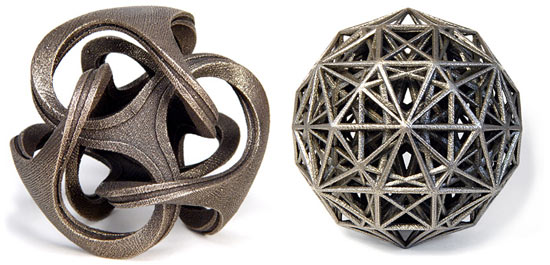
Another example is sculptor, Bathsheba Grossman, and her use of arithmetic to create pieces. On very developed patterns, this property can be verified in more than one rotation axis. The more symmetry conditions an object has, "the more elegant and cleansing is its shape, getting it closer of the elemental geometric solids like the cube, the tetrahedron, octahedron, the dodecahedron or the icosahedron"(Seven). Sometimes, the rules are very simple like, for instance, three rotations of 180ยบ in each of the coordinated perpendicular axes. 
 
Abbott, Edwin A. “Flatland By Edwin A. Abbott – PDF Download.” Free EBooks and AudioBooks, 17 Dec. 2010, egoarchive.com/book/410943153/flatland. 
“Bathsheba Grossman.” Wikipedia, Wikimedia Foundation, 21 Dec. 2018, en.wikipedia.org/wiki/Bathsheba_Grossman. 
“Sculpture and Math.” OBVIOUS, obviousmag.org/en/archives/2010/06/sculpture_and_math.html. 
“Understanding the Fourth Dimension From Our 3D Perspective.” Interesting Engineering, 12 Mar. 2018, interestingengineering.com/understanding-fourth-dimension-3d-perspective. 
“Victoria Vesna | University of California, Los Angeles.” Academia.edu, ucla.academia.edu/VVesna.
Abbott, Edwin A. “Flatland By Edwin A. Abbott – PDF Download.” Free EBooks and AudioBooks, 17 Dec. 2010, egoarchive.com/book/410943153/flatland. 
“Bathsheba Grossman.” Wikipedia, Wikimedia Foundation, 21 Dec. 2018, en.wikipedia.org/wiki/Bathsheba_Grossman. 
“Sculpture and Math.” OBVIOUS, obviousmag.org/en/archives/2010/06/sculpture_and_math.html. 
“Understanding the Fourth Dimension From Our 3D Perspective.” Interesting Engineering, 12 Mar. 2018, interestingengineering.com/understanding-fourth-dimension-3d-perspective. 
“Victoria Vesna | University of California, Los Angeles.” Academia.edu, ucla.academia.edu/VVesna.

Abbott, Edwin A. “Flatland By Edwin A. Abbott – PDF Download.” Free EBooks and AudioBooks, 17 Dec. 2010, egoarchive.com/book/410943153/flatland. 
“Bathsheba Grossman.” Wikipedia, Wikimedia Foundation, 21 Dec. 2018, en.wikipedia.org/wiki/Bathsheba_Grossman. 
“Sculpture and Math.” OBVIOUS, obviousmag.org/en/archives/2010/06/sculpture_and_math.html. 
“Understanding the Fourth Dimension From Our 3D Perspective.” Interesting Engineering, 12 Mar. 2018, interestingengineering.com/understanding-fourth-dimension-3d-perspective. 
“Victoria Vesna | University of California, Los Angeles.” Academia.edu, ucla.academia.edu/VVesna.
Abbott, Edwin A. “Flatland By Edwin A. Abbott – PDF Download.” Free EBooks and AudioBooks, 17 Dec. 2010, egoarchive.com/book/410943153/flatland. 

“Bathsheba Grossman.” Wikipedia, Wikimedia Foundation, 21 Dec. 2018, en.wikipedia.org/wiki/Bathsheba_Grossman.

“Sculpture and Math.” OBVIOUS, obviousmag.org/en/archives/2010/06/sculpture_and_math.html.

“Understanding the Fourth Dimension From Our 3D Perspective.” Interesting Engineering, 12 Mar. 2018, interestingengineering.com/understanding-fourth-dimension-3d-perspective. 

“Victoria Vesna | University of California, Los Angeles.” Academia.edu, ucla.academia.edu/VVesna.
Abbott, Edwin A. “Flatland By Edwin A. Abbott – PDF Download.” Free EBooks and AudioBooks, 17 Dec. 2010, egoarchive.com/book/410943153/flatland. 
“Bathsheba Grossman.” Wikipedia, Wikimedia Foundation, 21 Dec. 2018, en.wikipedia.org/wiki/Bathsheba_Grossman. 
“Sculpture and Math.” OBVIOUS, obviousmag.org/en/archives/2010/06/sculpture_and_math.html. 
“Understanding the Fourth Dimension From Our 3D Perspective.” Interesting Engineering, 12 Mar. 2018, interestingengineering.com/understanding-fourth-dimension-3d-perspective. 
“Victoria Vesna | University of California, Los Angeles.” Academia.edu, ucla.academia.edu/VVesna.


Friday, April 5, 2019

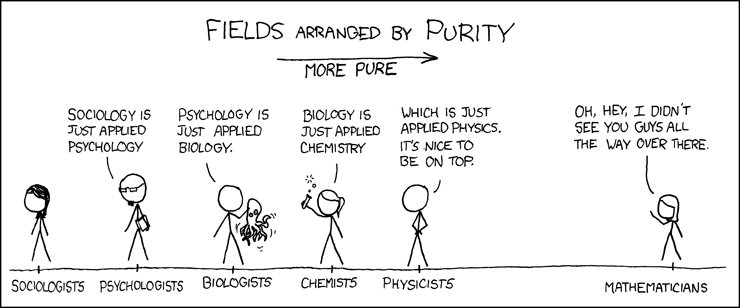
Charles Snow brought forth the connection of the significance of two cultures, art and science. Snow delivered a lecture in 1959 at Cambridge university specifying the separation of art and science. This lecture was then turned into an article which shows his personal relationship with both of these cultures. 

In this world there are left brain thinkers and right brain thinkers who tend to appeal more with either the arts, or science. Both groups of people are mostly polar in their ways of thought and views on life. 
These two cultures are identifiable in everyday life by certain aspects. Here at UCLA you can see the difference in the two cultures by simply identifying their outfits. People who identify more with the arts tend to believe in expressing themselves and an easy way to do so is through fashion. You are more likely to see art centered people wear more designer clothing as opposed to people who appeal more to science who do not typically care about expression through fashion.

Examining the differences between these two cultures changes my thinking in the fact that both groups are equally as intelligent, but mere opposites in desires and views on life. It gives me a better understanding of the type of thinker I intend myself to be. The introduction off the third culture also opens my perspective in knowing that there are more than two general groups of thinkers.